
Cryptocurrency scams that promise free token airdrops are on the rise. Among the latest is the Meme Liquid ($LIQUID) Airdrop scam, which poses as a legitimate giveaway for the native token of the MemeLiquid platform—but in reality, it’s designed to steal your crypto.
What the “Meme Liquid ($LIQUID) Airdrop” Scam Is
The scam uses a fake website, often mimicking the official MemeLiquid platform, to advertise an exclusive opportunity to claim free $LIQUID tokens. This offer is entirely bogus. When someone attempts to claim the tokens by connecting their cryptocurrency wallet, the scam activates a malicious drainer script. This script can instantly transfer digital assets out of the victim’s wallet and into the attacker’s wallet, with transactions that cannot be reversed.
How the Scam Works
- Scammers distribute links via:
- Fake or compromised social media accounts
- Phishing emails with enticing promises
- Rogue online ads and pop-up redirects
- The scam website closely imitates the platform’s branding, prompting users to connect their wallets.
- Once a wallet connection is accepted, the scam’s crypto drainer is triggered, allowing attackers to move funds without further action from the user.
- Because blockchain transactions are irreversible, victims typically lose their assets permanently.
Why This Scam Is Dangerous
- Permanent financial loss: Crypto stolen via a wallet drainer cannot be recovered.
- No legitimate token distribution: There is no real giveaway; the scam benefits only the attackers.
- Highly deceptive presentation: Fake sites closely resemble the authentic platform.
How to Protect Yourself
- Never connect your wallet to any website you haven’t verified personally.
- Always check the exact domain name before making wallet interactions; small typos can signal a scam.
- Be skeptical of offers that seem too good to be true, especially free crypto.
- Confirm any airdrop or token giveaway announcements through official channels only.
Eliminating Crypto Scam Threats
Step 1: Identify and Report the Scam
- Gather evidence (screenshots, emails, transaction IDs).
- Report the fraud to:
- Your crypto exchange (Binance, Coinbase, Kraken, etc.).
- Law enforcement agencies like the FBI’s IC3 (ic3.gov) or the SEC (sec.gov/tcr).
- The Federal Trade Commission (reportfraud.ftc.gov).
- Blockchain explorers (like Etherscan) to check your wallet transactions.
Step 2: Uninstall Suspicious Software & Apps
- On Windows: Open Control Panel > Programs & Features → Find & Uninstall suspicious programs.
- On macOS:Go to Finder > Applications → Drag unwanted apps to Trash.
- On Android & iOS: Go to Settings > Apps → Uninstall fake crypto wallets or trading apps.
Step 3: Remove Malicious Browser Extensions
- Google Chrome:
- Open
chrome://extensions/ - Remove any unfamiliar or crypto-related suspicious add-ons.
- Open
- Firefox / Edge / Safari:
- Go to browser settings > extensions → Delete suspicious ones.
- Clear browser cache & cookies:
- Open browser settings → Privacy → Clear browsing data.
Step 4: Secure Your Accounts & Wallets
Change passwords immediately for:
- Crypto wallets
- Exchanges
- Email & social media
Enable Two-Factor Authentication (2FA):
- Use Google Authenticator, YubiKey, or Authy.
Move remaining funds to a secure wallet:
- Use a hardware wallet (Ledger, Trezor) instead of online wallets.
Step 5: Scan for Hidden Malware & Keyloggers
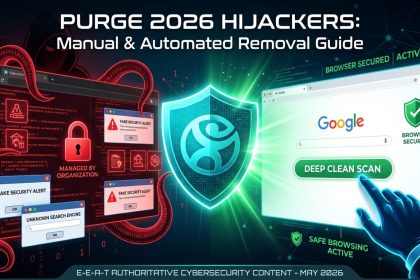
Your system may still have spyware, tracking your keystrokes or redirecting you to scam sites. A deep scan is essentialto detect and remove threats.
⏳ For a thorough malware check, use SpyHunter. (See Method 2 below.)
Automatic Removal with SpyHunter
If you suspect hidden malware, SpyHunter can detect and remove crypto scam-related malware, trojans, and browser hijackers.
Step 1: Download SpyHunter
Follow SpyHunter installation instructions here: SpyHunter Download Guide
Step 2: Install and Run SpyHunter
- Run the SpyHunter installer.
- Follow the on-screen installation steps.
- Launch SpyHunter after installation.
Step 3: Perform a Full Malware Scan
- Click “Start Scan Now”.
- Let SpyHunter scan for:
- Crypto-stealing malware
- Browser hijackers redirecting to fake exchanges
- Phishing-related spyware
Step 4: Remove All Detected Threats
- Click “Fix Threats” to eliminate malicious programs.
- Restart your system to complete the cleanup.
Step 5: Enable Real-Time Protection for Future Security
Activate SpyHunter’s real-time protection to:
- Block phishing & scam websites
- Prevent future infections
- Monitor system vulnerabilities
Proactive Prevention: How to Avoid Crypto Scams
- NEVER share your private keys or seed phrases – even with “support teams.”
- Always verify URLs before logging in to exchanges.
- Use only official wallet apps from trusted sources.
- Ignore unsolicited investment offers via Telegram, Discord, and social media.
- Check for HTTPS & security certificates before entering login details.
- Regularly scan your device for hidden malware and spyware.
- Store crypto in a hardware wallet (Ledger, Trezor) rather than online wallets.
Bottom Line
The Meme Liquid ($LIQUID) Airdrop scam is a malicious cryptocurrency giveaway fraud that exploits users’ fear of missing out. Its sole purpose is to drain digital assets from connected wallets through unauthorized blockchain transactions. Always double-check URLs, avoid connecting wallets to untrusted sites, and disregard unsolicited airdrop offers.
Key Takeaways
- Scam Type: Cryptocurrency giveaway fraud
- Fake Claim: Free $LIQUID token airdrop
- Primary Threat: Crypto wallet draining
- Real Platform: MemeLiquid – a decentralized Solana exchange
- Warning Signs: Unofficial domain, unsolicited links, unrealistic earnings