



The BISO – How Business Information Security Officers Bridge Security and Business
Contrary to mainstream belief, cybersecurity isn’t just an IT responsibility anymore — it’s a business concern. Organizations are increasingly relying on Business Information Security Officers (BISOs) to ensure that security measures make sense for real-world operations, helping businesses manage risk without slowing down day-to-day activities. BISOs serve as the connection point between technical teams and business units, translating cybersecurity into practical, actionable strategies for the people driving business outcomes. What a BISO Does and Why It Matters Many organizations struggle with cybersecurity policies that feel disconnected from the realities of different business units. A BISO steps in to bridge that gap: By combining technical awareness with business acumen, BISOs help prevent misalignment that can leave organizations vulnerable or slow down critical projects. How Organizations Benefit From a BISO Embedding a BISO can influence multiple aspects of business operations: These benefits aren’t just theoretical. Companies with BISOs often see smoother integration of security policies, stronger adoption of best practices, and more informed risk management at the division level. Where a BISO Fits in the Organization While the Chief Information Security Officer (CISO) sets enterprise-wide strategy, the BISO operationalizes those goals within individual business lines. This role requires balancing priorities between central security objectives and local business needs. RoleChief Information Security Officer (CISO)Business Information Security Officer (BISO)ScopeEnterprise-wide securityBusiness-unit focusedFocusTechnical controls, governance, policyBusiness risk, stakeholder alignmentReportingExecutive-level cybersecurity leadershipReports to CISO, collaborates with business leadersStrengthSecurity strategy and technical expertiseTranslating security into business impact…


TLS Inspection Tools: How Businesses Can See Through Encrypted Traffic
Encrypted traffic is everywhere. From HTTPS websites to cloud applications, TLS encryption keeps data private—but it also creates blind spots for security teams. Without visibility into these encrypted streams, malicious activity can slip past firewalls, malware scanners, and intrusion detection systems. For businesses, this hidden risk can mean ransomware, phishing, or data leaks that no one sees coming. TLS inspection tools bridge that gap, giving companies the ability to analyze encrypted traffic safely and efficiently. Understanding the Challenge of Encrypted Traffic Modern enterprises rely heavily on cloud services, web apps, and remote work tools—all secured with TLS (Transport Layer Security). While encryption protects sensitive data, it also: For IT teams, the question isn’t whether to inspect traffic—it’s how to do it without slowing down networks, disrupting applications, or creating legal and privacy concerns. How TLS Inspection Tools Work At their core, TLS inspection tools act as intermediaries in encrypted communications: This process allows businesses to regain visibility into encrypted traffic without exposing sensitive data externally. Types of TLS Inspection Solutions 1. Enterprise-Scale Inspection Platforms Large organizations need solutions that can handle thousands of simultaneous connections without compromising performance. Popular enterprise tools include: These platforms are optimized to minimize latency, integrate with existing security stacks, and support regulatory compliance. 2. Development and Testing Tools Smaller-scale tools are helpful for IT teams testing applications or troubleshooting encrypted traffic: While not enterprise-ready, these tools can reveal hidden vulnerabilities during testing or application development. Key Considerations for Businesses Implementing TLS inspection involves balancing security, performance, and privacy: By addressing these considerations upfront, businesses can deploy TLS inspection without disrupting operations. Benefits Beyond Security…
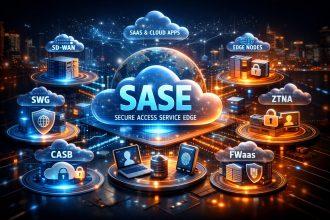
What is SASE?
SASE (Secure Access Service Edge) is a cybersecurity and networking framework introduced by Gartner. It combines networking and security functions into a single…

Automated Remediation Tools: Boost Your Business Cybersecurity
Streamline business security with automated remediation tools. Reduce breaches, save time, and strengthen cyber defenses efficiently.

File Integrity Monitoring Software for Businesses: Complete Guide to Protecting Critical Systems
Cyberattacks don’t always start with dramatic breaches. Sometimes, they begin with a single unauthorized file change. A modified configuration file. A…

UEBA Tools: Enhancing Business Cybersecurity with User and Entity Behavior Analytics
What Are UEBA Tools? UEBA stands for User and Entity Behavior Analytics. These tools monitor and analyze patterns of behavior for users,…

Zero-Day Exploit Protection: A Business-Critical Guide
One of the most dangerous threats facing businesses is also one of the most elusive: the zero-day exploit. These attacks…

Cloud‑Native Security Platforms: What Businesses Need to Know
A cloud‑native security platform (CNSP) is a security solution built to protect cloud-native environments such as containers, microservices, serverless computing, and infrastructure-as-code.…

Why Active Directory Hardening Is Critical for Every Business?
When attackers look for a way into a company’s digital infrastructure, they often go straight for the heart: Active Directory…

Top SOC-as-a-Service Vendors for Business Cybersecurity in 2025
Cyber threats continue to evolve in complexity and frequency, placing growing pressure on businesses—especially small and mid-sized enterprises—to maintain 24/7…